
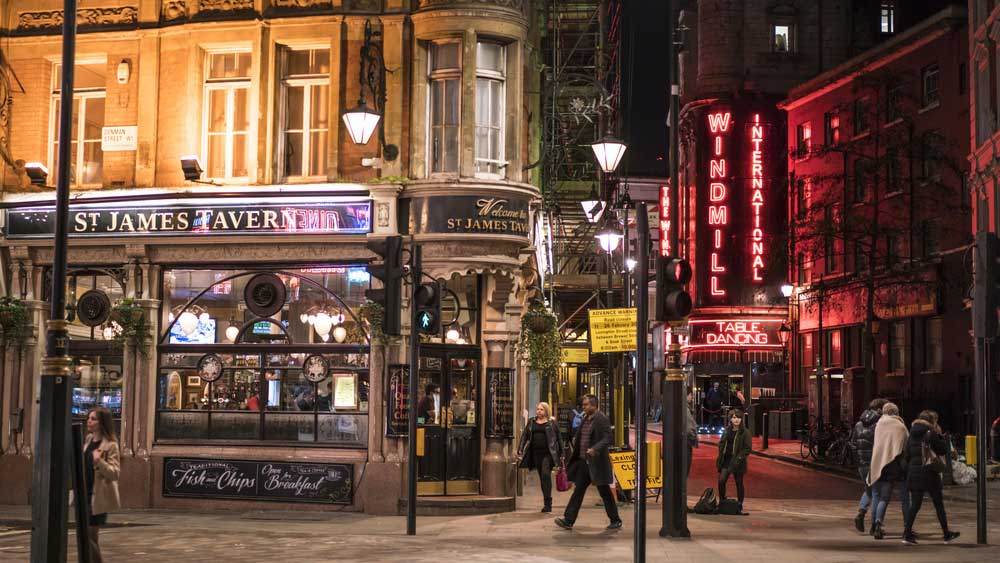
It is not often that I have the luxury of a day off and a day to explore our capital city, but recently, after being lucky enough to get a review copy of a new book, I did just that, and I did what London does better than any city in Europe, which is to eat and drink your way through its own history without ever needing a taxi.
The guidebook for this particular walk is Dylan Jones’s Table Hopping: The Secret History of London Restaurants. Jones, a former editor of GQ, spent 18 months interviewing more than 100 chefs, owners, critics and regulars, and the result is an oral history of five decades of dining out, most of it within a mile of Piccadilly Circus. The stories from the 1990s are frequently unprintable in a business magazine. The rooms, happily, are mostly still there, and the route between them is barely two miles.
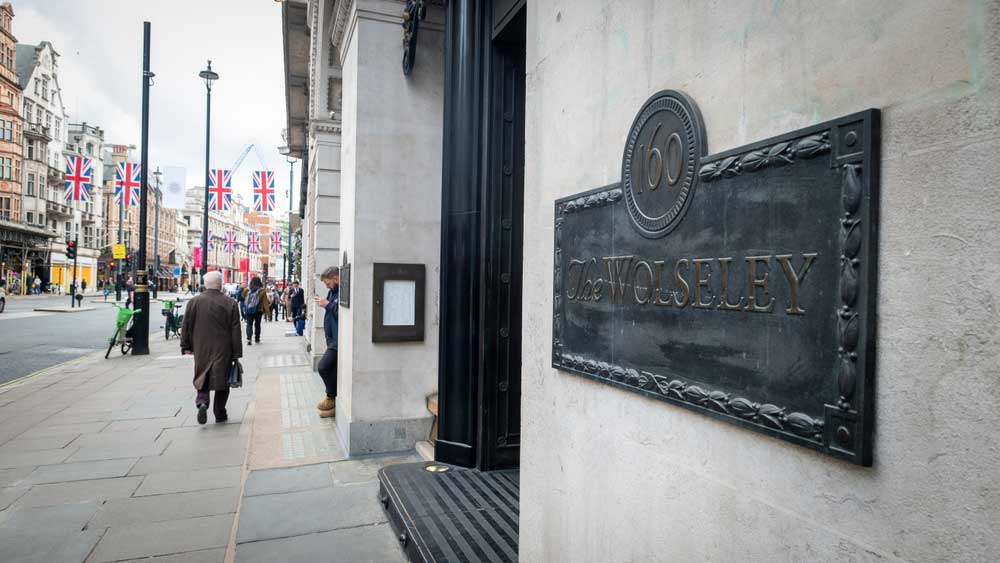
7.30am: breakfast at The Wolseley
Start where Jones’s book ends. The Wolseley, at 160 Piccadilly, was built in 1921 as a car showroom, spent most of the century as a bank and opened as a grand café in November 2003. Chris Corbin and Jeremy King, who created it, no longer own it; the Thai group Minor took control in 2022. The room is unchanged: black lacquer, vaulted ceilings and the best people-watching in London before 9am.
Breakfast is served from 7am on weekdays. The full English is £24.50 and there is porridge at £7.50 for the abstemious. Book ahead, although tables are held back for walk-ins every day. Green Park station is two minutes away.
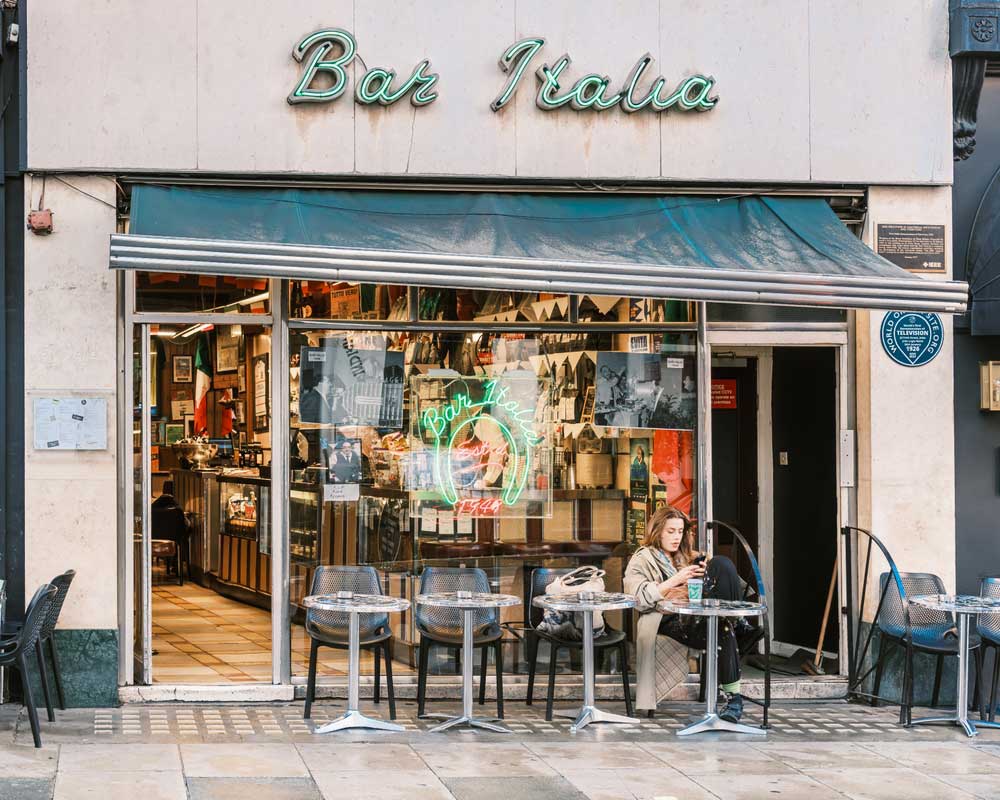
10am: coffee in Frith Street
Walk east along Piccadilly, cross the Circus and turn up into Soho. It takes a quarter of an hour. Bar Italia, at 22 Frith Street, has been run by the Polledri family since 1949 and keeps hours that would shame most nightclubs, opening at seven in the morning and closing in the small hours. Stand at the counter with an espresso. In January 1926, in a room upstairs, John Logie Baird gave the first public demonstration of television, and there is a blue plaque to prove it.
Round the corner on Greek Street is Maison Bertaux, which claims to be London’s oldest pâtisserie, founded in 1871. If you managed to skip the Wolseley’s pastries, this is your second chance.
12.30pm: lunch at Quo Vadis
Soho offers three lunches with a serious claim on your time. The first choice is Quo Vadis at 26–29 Dean Street, which celebrated its centenary last year. Peppino Leoni opened it in 1926 in a building where Karl Marx had lived in the 1850s. Marco Pierre White and Damien Hirst, two of the principal characters in Jones’s book, took it on in 1996. Since 2008 it has belonged to the brothers Sam and Eddie Hart, and since 2012 the kitchen has been run by Jeremy Lee, one of the most generous cooks in Britain. Order the smoked eel sandwich and whatever pie is on that day. Harden’s puts the bill at about £91 a head. The restaurant is open Monday to Saturday; the floors above are a private members’ club.
If Quo Vadis is full, try L’Escargot at 48 Greek Street, which was founded in 1896, has been on its present site since 1927 and calls itself London’s oldest French restaurant. Or go to Andrew Edmunds at 46 Lexington Street, a candlelit 18th-century townhouse opened in 1985 and famous for marking up its wine less than anyone else in the West End. Harden’s estimates about £80 a head.
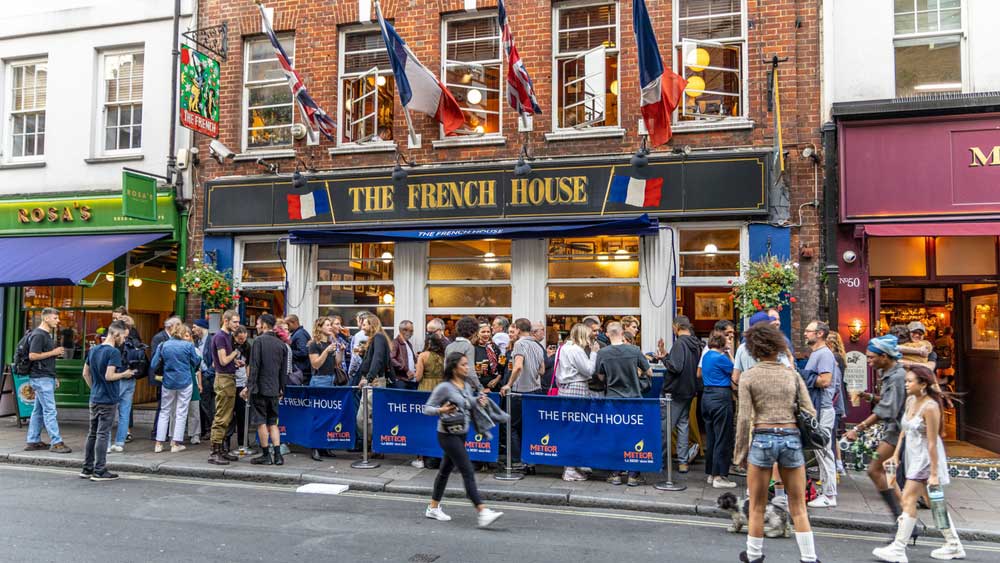
3pm: a half at the French House
There are two famous doors on Dean Street and you can walk through only one of them. The Groucho Club, at number 45, opened in 1985 and features in Jones’s book more often than its members might like. It has belonged to Artfarm, the hospitality company of the art dealers Iwan and Manuela Wirth, since 2022. It is for members and their guests, so unless you know one, keep walking.
The French House at number 49 will let anybody in. It opened in 1891, and Charles de Gaulle is said to have written his appeal to the French people upstairs in 1940. The house rules are posted and enforced: no music, no machines, no television and no mobile phones. Beer comes in half pints only. Put your telephone in your pocket and talk to whoever is standing next to you. This is the single most valuable hour of the day.
5pm: a drink in the Old Atlantic
Walk back down to Sherwood Street, just behind Piccadilly Circus, and descend the stairs of Brasserie Zédel. You are now standing in the most notorious room in Jones’s book. In 1994 Oliver Peyton opened the Atlantic Bar & Grill in this basement, once part of the Regent Palace Hotel. It was the largest restaurant in London and for a time the hardest to get into; Peyton tells Jones that he once walked Alexander McQueen to the door himself, only to be stopped by his own security guard.
The Atlantic closed after 11 years. In 2012 Corbin and King turned the space into a Parisian brasserie, with an art deco cocktail room, Bar Américain, and a cabaret, Crazy Coqs. Have a drink at the bar. If you are on a budget, the prix fixe in the brasserie next door, at £16.95 for two courses and £19.95 for three when we checked, is the best-value meal in the West End.
7.30pm: dinner on the Strand
For dinner, head east. It is a ten-minute walk through Covent Garden, past the Ivy on West Street, which opened in 1917 and was, in the 1990s, the room where Jones’s cast of actors, artists and pop stars went to be recognised. It is open until midnight and has a good pre-theatre trade, but the more interesting table tonight is a little further on.
Simpson’s in the Strand, at number 100, reopened in March 2026 after six years in darkness. It is the work of Jeremy King, the same restaurateur whose Wolseley you had breakfast in, and it is his riposte to losing it. Simpson’s dates from 1828, when it was a cigar divan and chess club. Book the Grand Divan, the panelled main room, and have the roast rib of beef, carved from a silver trolley at £39.50. Dinner will cost about £100 a head. Upstairs, Romano’s is a cheaper and more informal grand café, with a three-course late supper at £19.75 from 9.45pm.
11pm: nightcap
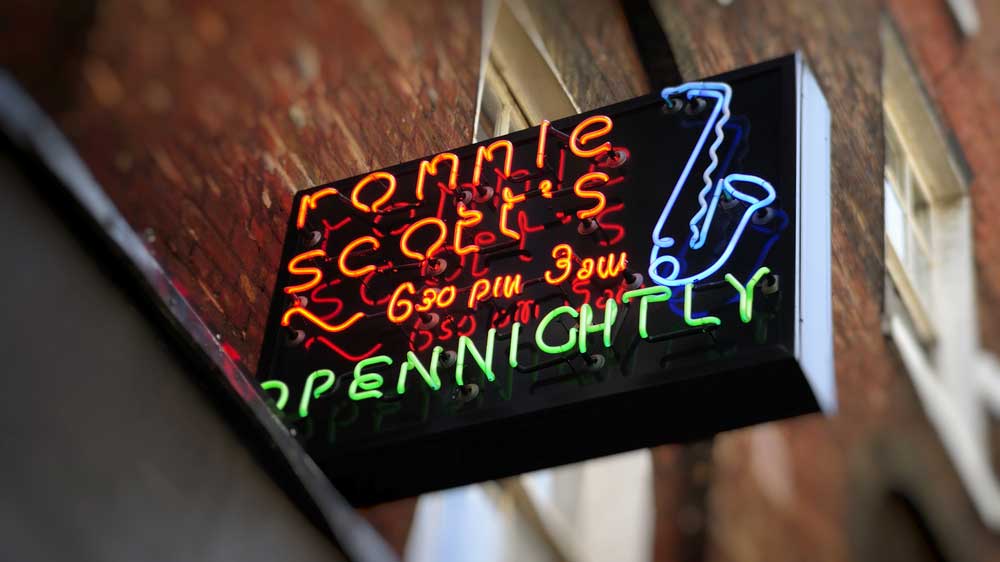
Soho after dark is quieter than the one Jones describes, and a row over late licences between residents, the council and the Mayor of London rumbles on. There is still plenty to do. Ronnie Scott’s, on Frith Street since 1965, reopened its upstairs room last year as a 140-seat venue, with late shows starting at 11.15pm and tickets from £12. Bar Termini on Old Compton Street, Tony Conigliaro’s tiny homage to an Italian station bar, serves the best negroni in London and stays open until 1am on Fridays and Saturdays. And for the brave there is Trisha’s, a basement drinking club on Greek Street that has been going for about 90 years.
Where to stay
To do the walk properly, sleep in Soho. Hazlitt’s, on Frith Street, has 30 rooms in a row of Georgian houses, with rates from about £305. Dean Street Townhouse has 39 rooms from about £400. For something grander, Broadwick Soho starts at about £558 and Firmdale’s Ham Yard Hotel at about £594. All are within five minutes of Tottenham Court Road station, where the Elizabeth line arrives direct from Heathrow in a little over half an hour.
One day is not long. But it is long enough to understand what Jones’s book is really about, which is that a restaurant is never only somewhere to eat. In London it is where the city goes to meet itself, and a business traveller who has spent a day at its tables will understand the place rather better at the next morning’s meeting.
The day at a glance
7.30am The Wolseley, 160 Piccadilly, W1. Tel 020 7499 6996. Tube: Green Park.
10am Bar Italia, 22 Frith Street, W1; Maison Bertaux, 28 Greek Street, W1.
12.30pm Quo Vadis, 26–29 Dean Street, W1 (closed Sunday). Alternatives: L’Escargot, 48 Greek Street; Andrew Edmunds, 46 Lexington Street.
3pm The French House, 49 Dean Street, W1. No bookings for the bar.
5pm Bar Américain at Brasserie Zédel, 20 Sherwood Street, W1. Tube: Piccadilly Circus.
7.30pm Simpson’s in the Strand, 100 Strand, WC2. Tube: Charing Cross.
11pm Ronnie Scott’s, 47 Frith Street; Bar Termini, 7 Old Compton Street.
Comments