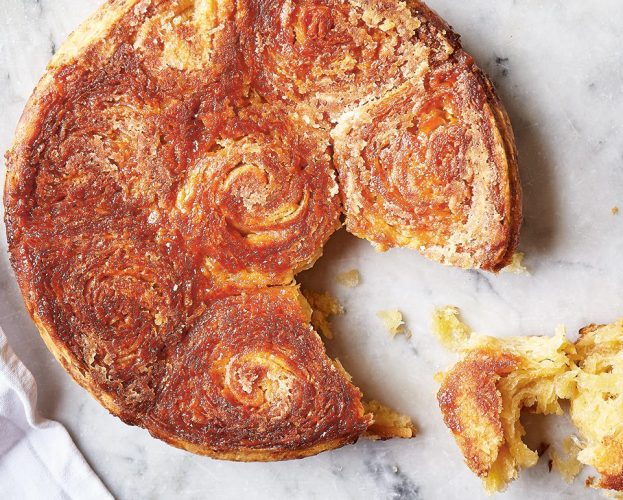
You never knead a scone dough, as you want it to be only very lightly mixed. This is what gives them their crumbly texture.

Afternoon tea recipes · British recipes
The best scones
These traditional scones are quick, easy and use just three ingredients. Serve with jam and cream for afternoon tea or a Mother’s Day treat.
Vegetarian
Serves8
Hands-on15 min
Oven15 min
DifficultyEasy
Method
Preheat the oven to 220°C/fan200°C/gas 7. Sift the flour and a pinch of salt into a large bowl. Using your fingertips, rub in the butter until it forms fine crumbs.
Make a well in the centre of the crumbs and pour in the milk. Using a palette or table knife, quickly bring the mixture together into a soft dough. Knead briefly on a lightly floured surface until smooth, then pat out to a thickness of 2cm.
Dust a 5cm plain metal cutter with flour and use to stamp out rounds. Push the cutter down firmly but take care not to twist it, or the scones may rise unevenly.
Transfer the scones to a non-stick baking sheet, dust lightly with flour and bake for 15 minutes until well risen and golden. Transfer to a wire rack and leave to cool.
Nutrition
| Calories | 161kcals |
|---|---|
| Fat | 6.3g (3.9g saturated) |
| Protein | 3.2g |
| Carbohydrates | 24.5g (3g sugar) |
| Fibre | 1.2g |
Quick wins, tips & make ahead
Make sure your butter is fridge cold when you chop it and mix it into the flour. Cold fat in a dough will create a flakier texture once it’s introduced to the hot baking sheet. If you’ve got the time, put the cut scones in the fridge for 30 minutes before baking for maximum flakiness.
Preheat the heavy-duty baking tray to get the raising agent working immediately. This gives the lightest, airiest scones with the crispest bases.
Do everything with the lightest of touches – overworking the dough can make the scones tough. Using a dinner knife to mix in the liquid rather than your hands helps avoid overworking the mixture.
Press out the dough rather than rolling it to avoid stretching the dough or compacting it.
The deeper the dough, the taller your scones will be. When cutting them out the dough should almost come to the top of the cutter.
Don’t twist the cutter – press straight down for an even rise.
You can warm day-old or defrosted scones briefly in a microwave or oven to bring them back to life.
Rate & review
If you loved this
See all →More afternoon tea recipes

Buttermilk strawberry shortcake
🍽 Serves 4◆ Easy

Spiced plum cake with swiss meringue frosting
🍽 Serves 8-10◆ Easy

Lighter plum and almond traybake
🍽 Serves 16◆ Easy
Sour cherry, pistachio and cardamom bakewell tart
🍽 Serves 10◆ Easy
Keep browsing