
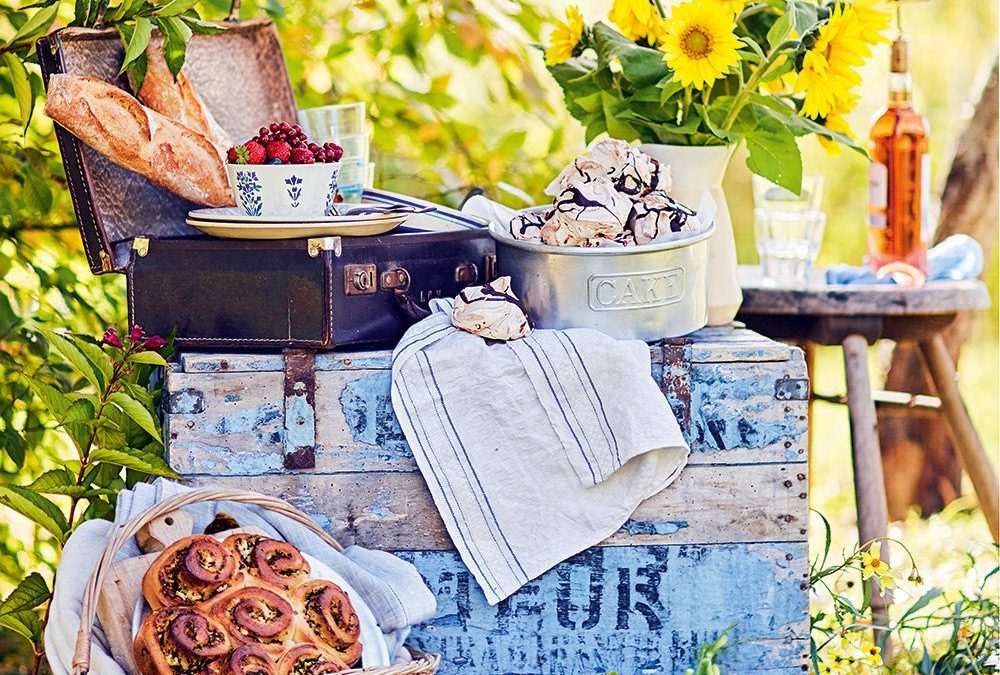
Everyone can bring a bag of crisps. The pleasure of a really good picnic is watching people realise, one dish at a time, that someone has gone to some trouble.
The trick is choosing food that travels well and improves as it sits, then packing it so it arrives looking like it did when it left the kitchen. Here is how to do both.
Start with the classics, done properly
A potato salad is only dull if you make it dull. Dress the potatoes while they are still warm so they drink the vinaigrette, then add the creamy element once they have cooled. Plenty of herbs, plenty of acidity, and a few capers or cornichons to cut through.
Homemade sausage rolls are the single most impressive thing you can bring for the least effort. Good sausagemeat, something sharp in the filling like apple or fennel seed, and a proper egg wash. They are better an hour out of the oven than straight from it, which makes them ideal.
For the sweet end, easy cakes that travel flat are your friend. A tray bake cut into squares survives a rucksack. A layer cake with buttercream does not.
Then show off a little
A whole poached salmon sounds ambitious and is really just a fish and a large pan. Serve it cold with a herby mayonnaise and it becomes the centrepiece of the whole thing.
A pressed sandwich made the night before is the sleeper hit. Hollow out a round loaf, layer in roasted vegetables, cheese and cured meat, wrap it tightly and weigh it down in the fridge overnight. Cut into wedges, it looks like something from a magazine.
A frittata or tortilla, cooked slowly and served at room temperature, is quietly one of the best picnic foods there is. So is a good pâté with cornichons, and a jar of something pickled to cut through everything else.
Finish with a proper cheese, one good one rather than three mediocre ones, and fruit that does not bruise. Cherries, apricots, grapes.
Packing it so it survives
Chill everything overnight, not just for an hour. Cold food packed cold stays safe far longer. Freeze a few bottles of water and use them as ice blocks that turn into drinks later in the afternoon.
Pack heavy things at the bottom and anything delicate on top, and use tins and rigid containers rather than bags for anything that can be crushed. Dress salads on site, not at home, and carry the dressing in a jam jar. Leaves go limp within the hour otherwise.
Take a chopping board. It doubles as a serving platter and a flat surface, and it is the single thing people most often forget.
The essentials checklist
A rug with a waterproof backing. A sharp knife wrapped in a tea towel. A bottle opener and corkscrew. Salt and pepper. Kitchen roll and a damp cloth in a bag. Proper cutlery and real glasses if you are feeling brave, or enamel if you are not. Bin bags. Wet wipes. A blanket for when it cools down.
The details that lift it
Cloth napkins instead of paper. Everything served on boards and in bowls rather than eaten from the container it travelled in. Drinks decanted into something nicer than the bottle they came in. A small bunch of herbs or flowers laid on the rug.
None of it is difficult, and all of it is noticed.



Comments