
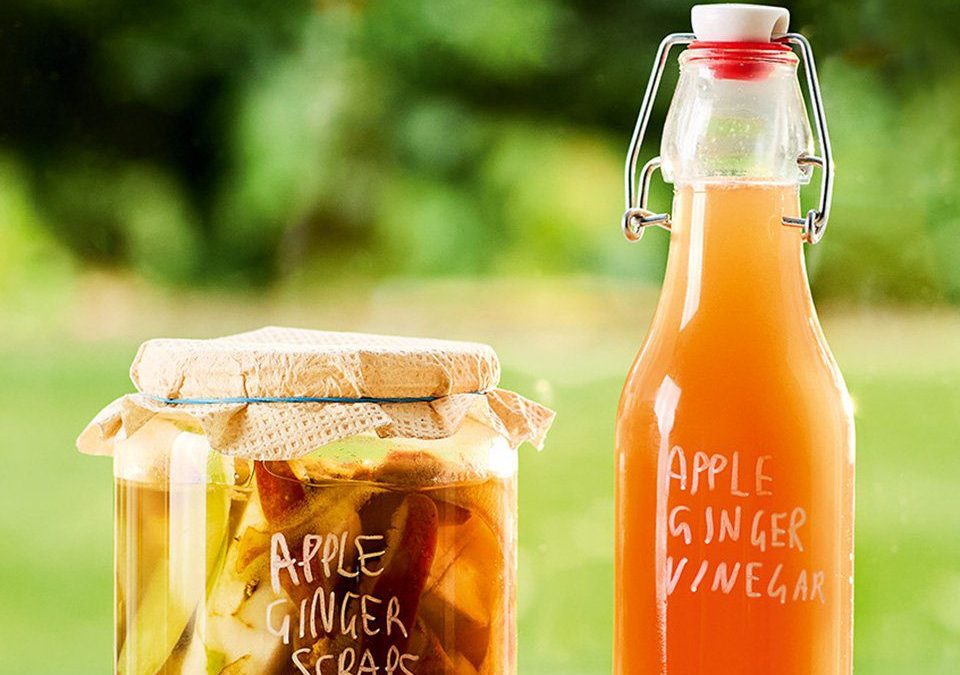
As well as tips and tricks, you’ll find recipes that preserve the late summer and autumn harvest, including classic apple cider vinegar, a clever recipe that uses pineapple scraps and a speedy, minty infusion.
Two routes to fruit vinegar
Everything here falls into one of two camps, and it’s worth knowing which you’re doing before you start.
Fermented vinegar is made from scratch. Fruit sugars are converted first into alcohol by wild yeasts, then into acetic acid by Acetobacter bacteria. It takes six to ten weeks, costs virtually nothing, and gives you something with real depth. This is the proper method, and it’s how the apple and pineapple recipes below work.
Infused vinegar is a shortcut. You take a good shop-bought vinegar and steep fruit or herbs in it. Ready in anything from a day to a week, no fermentation required, no chance of failure. The mint recipe below is this route, and there’s no shame in it — a great many commercial fruit vinegars are made exactly this way.
What you need
A wide-mouth glass jar or ceramic crock — never metal, which reacts with acid. A square of muslin and an elastic band, so the culture can breathe while flies stay out. Digital scales. A small plate or fermentation weight to hold the fruit under the liquid. That’s genuinely it. pH strips are useful but optional; if it tastes sharply of vinegar, it’s acidic enough.
The science in one paragraph
Yeast eats sugar and produces alcohol. Acetobacter — airborne, already on the fruit skins, already in your kitchen — eats that alcohol and produces acetic acid. The first stage needs the jar loosely covered so gas can escape; the second stage needs air, because Acetobacter is aerobic and will simply stall without it. That’s why you cover with muslin rather than a lid, and why a wide, shallow vessel works better than a narrow one: more surface area, faster conversion.
The recipes
-
Classic apple cider vinegar
MAKES ABOUT 1 LITRE · 6–10 WEEKS
The one to start with, and the thriftiest thing in this guide — it’s made from the cores and peelings you’d otherwise compost.
Fill a large jar about three-quarters full with apple scraps, or roughly chopped whole apples if you have windfalls. Dissolve 1 tablespoon of sugar per 250ml of water and pour over to cover completely, leaving 5cm of headspace. Weigh the fruit down, cover with muslin, and leave somewhere dark at 18–22°C.
Stir daily for the first week. It will fizz, smell yeasty and turn cloudy — all correct. After 2 weeks, strain out the fruit and return the liquid to the clean jar. Now leave it alone. Over the next 4–8 weeks a pale, gelatinous film — the mother — will form on the surface. Don’t break it. Taste from beneath it every fortnight. When it’s sharp enough for you, bottle it and cap it tightly.
Save a splash of the finished vinegar, mother and all, to inoculate your next batch. It’ll halve the time.
-
Pineapple scrap vinegar
MAKES ABOUT 1 LITRE · 4–6 WEEKS
One of the cleverest uses of kitchen waste going. Pineapple skin and core are loaded with sugar and carry a vigorous wild yeast population, so this ferments faster and more reliably than almost anything else.
Take the skin and core of one pineapple — wash the fruit before peeling, but don’t scrub the skin afterwards, since that’s where the yeast lives. Pack into a jar, add 60g of soft brown sugar dissolved in 1 litre of water, and submerge. Cover with muslin.
Within two days it should be actively bubbling. Strain after 7–10 days, when the fizzing slows and it smells lightly alcoholic, then leave the liquid to acetify for a further 3–4 weeks. The result is bright, tropical and slightly floral — excellent in dressings for summer salads, and very good indeed with grilled pork.
-
Speedy mint infusion
MAKES 500ML · 24 HOURS
The instant-gratification recipe, and proof that you don’t need patience to make something good.
Bruise 30g of fresh mint — press it firmly with the back of a knife rather than chopping, which turns it black. Pack into a sterilised bottle. Warm 500ml of white wine vinegar to about 60°C, not simmering, and pour over. Seal and leave somewhere dark.
It’s usable after 24 hours and at its best after 3 days. Strain out the mint at that point or the flavour turns grassy. Use it for a sharp mint sauce with lamb, or shaken into dressings for tomatoes and peas.
-
Blackberry vinegar
MAKES 500ML · 5 DAYS
The classic English hedgerow preserve, and a cold infusion, so nothing is cooked and the flavour stays bright.
Lightly crush 500g of blackberries and cover with 500ml of cider vinegar. Cover and leave for 5 days, stirring daily. Strain through muslin without squeezing, or it clouds. For a sweeter shrub-style drinking vinegar, measure the strained liquid, add an equal weight of sugar, and heat gently until dissolved.
-
Spiced pear and star anise vinegar
MAKES 750ML · 8 WEEKS
For late autumn, and the most elegant of the lot. Follow the apple cider method above using 1kg of chopped ripe pears, adding 2 star anise and a cinnamon stick at the second stage rather than the first, so the spice doesn’t inhibit the fermentation. Superb over roast squash, or in a dressing for a chicory and blue cheese salad.
Troubleshooting
A white, wrinkled film on top is kahm yeast. Harmless. Skim it off and carry on.
Fuzzy growth in blue, green, black or pink is mould. Discard the batch — don’t scrape and hope. It usually means fruit was floating above the liquid, so weigh it down next time.
Nothing is happening after five days. Too cold. Move it somewhere warmer, or add a splash of unpasteurised live vinegar to kickstart it.
It smells of nail varnish. Too much air, too early, or too warm. Move it somewhere cooler; it often corrects itself.
It’s still sweet after six weeks. There was more sugar than the yeast could handle. Dilute with a little water and give it another fortnight.
Storing and using
Bottle in sterilised glass, cap tightly and keep somewhere cool and dark. Homemade vinegar is self-preserving and will keep for a year or more — it may throw a sediment or grow a new mother, neither of which is a problem. Strain before use if it bothers you.
Beyond dressings, use fruit vinegar to deglaze a pan after frying pork or duck, to sharpen a lentil soup at the last moment, to quick-pickle red onions, or diluted with sparkling water over ice as a drinking vinegar. The thriftiest use of all: a splash in the water when you’re poaching eggs.




Comments